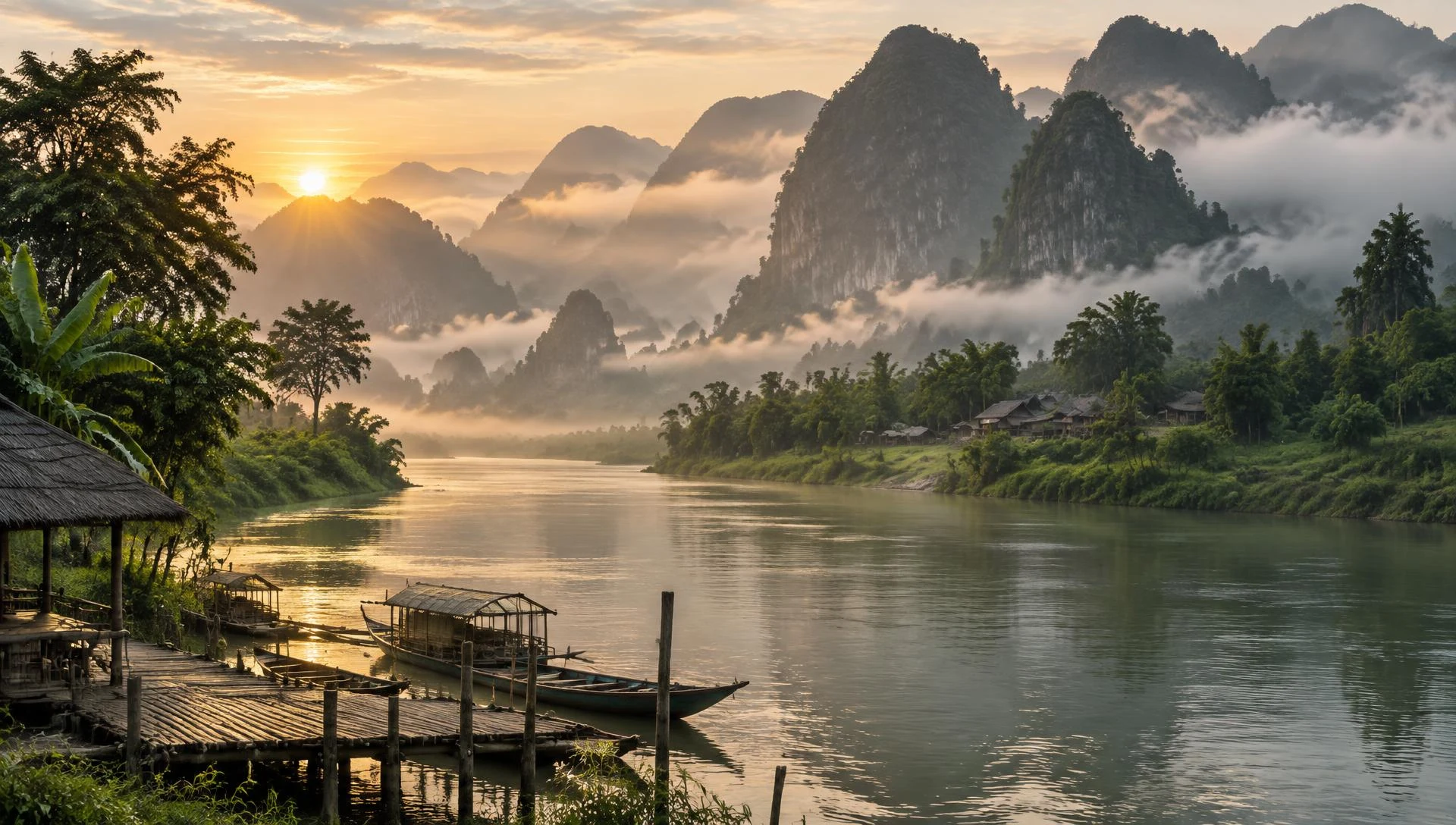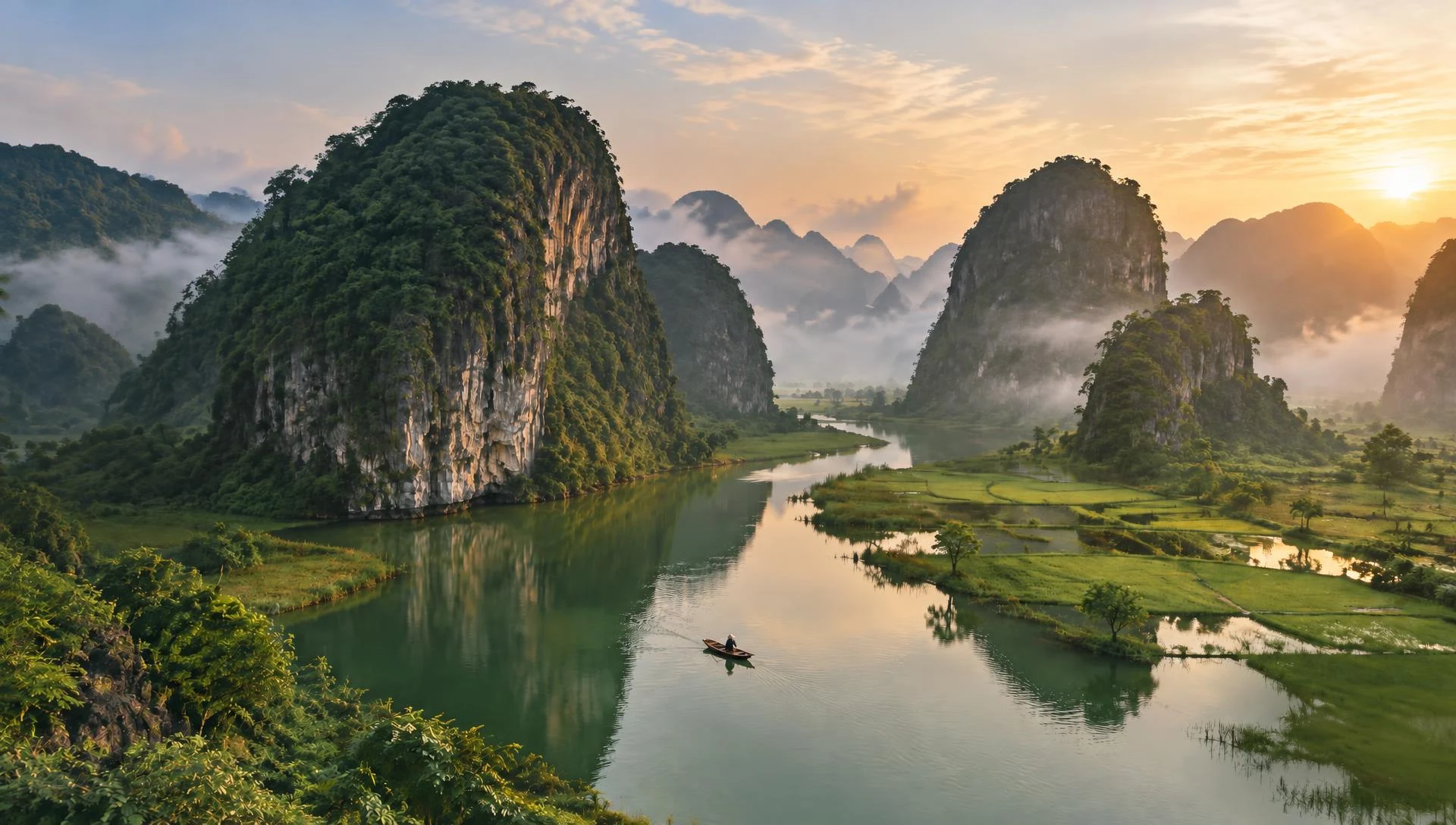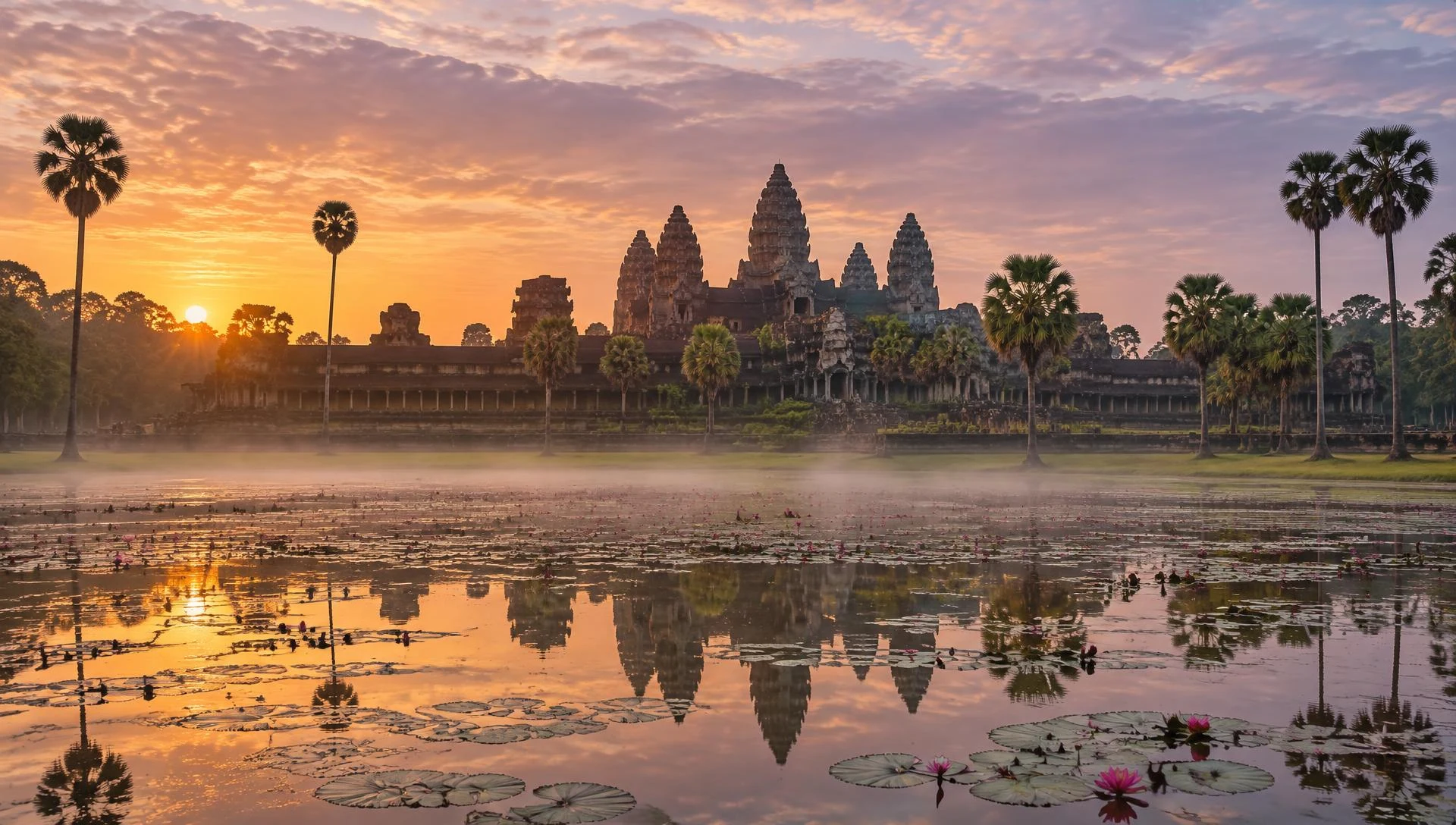
Thailand’s reputation has long been shaped by its loudest corners, yet step twenty minutes off the main resort strip and the country remains remarkably hushed—a landscape of teak forest monasteries, flooded karst canyons, and fishing islands where longtail boats still outnumber cars.
For travellers weighing the best places to visit in Thailand in 2026, the secret lies in choosing the right micro-region for your season rather than following a generic capital-to-beach package. Stretching more than sixteen hundred kilometres from the misty Shan hills of the Burmese border down to the coral archipelagos of the Andaman Sea and the Gulf of Thailand, the kingdom encompasses three distinct climatic and cultural zones. From November through March, dry northeast breezes bring clear skies to the northern Lanna valleys, Khao Sok National Park, Koh Samet, and the western Andaman coast; from May through September, the sheltered lower Gulf islands around northern Koh Phangan enjoy calm, sunlit waters while the rest of mainland Asia receives the summer rains.
Approach Thailand with a willingness to linger in secondary provinces and national parks, and you discover why it remains the effortless heart of traveling through Southeast Asia slowly by rail and boat.
Finding the quiet side of Siam
Even in Bangkok, stillness is hiding in plain sight. Instead of basing yourself among the concrete flyovers of lower Sukhumvit, stay along the historic bend of the Chao Phraya River near Song Wat Road or cross the water into the orchard-lined canals (khlongs) of Thonburi. At seven in the morning inside the courtyards of Wat Pho or Wat Ratchabophit, before tour groups arrive, the only sound is the sweep of palm brooms across warm stone and the low chime of wind bells beneath gilded eaves.
From Bangkok’s Krung Thep Aphiwat terminal, the kingdom’s rail and road corridors branch cleanly in two directions: north into the cool river basins of the ancient Lanna Kingdom, and south down the slender Kra Isthmus toward rainforest lakes and two separate seas.
The Northern Highlands: Forest wats of Chiang Mai, Lampang, and Nan
Boarding the overnight sleeper train from Bangkok to Chiang Mai lets you wake as the tracks climb through the teak forests and mist-filled gorges of Lampang and Khun Tan. In Chiang Mai, look past the busy night bazaars to the forested foothills of Suthep. Follow the ancient Monk’s Trail on foot through dipterocarp forest to Wat Pha Lat—a fourteenth-century meditation sanctuary built directly over a cascading mountain stream where mossy stone stupas and carved naga balustrades sit shaded beneath dense canopy.
If you have four days to spare in the north, drive east across the mountain ridges into the provinces of Phrae and Nan near the Lao frontier. Rarely visited by international tour buses, Nan preserves the unhurried pace of northern Thailand forty years ago: cyclists ride past golden rice fields beneath the Doi Phu Kha mountains, weavers work intricate Tai Lue cotton patterns on handlooms beneath stilted wooden houses, and the sixteenth-century murals inside Wat Phumin depict everyday village life with quiet humour and grace.

The Southern Rainforest: Khao Sok National Park and Cheow Lan Lake
Midway down the southern peninsula in Surat Thani province lies one of the oldest contiguous evergreen rainforests on earth: Khao Sok National Park. Older and more botanically diverse than the Amazon, this valley of towering Permian limestone karsts connects the Gulf of Thailand with the Andaman coast.
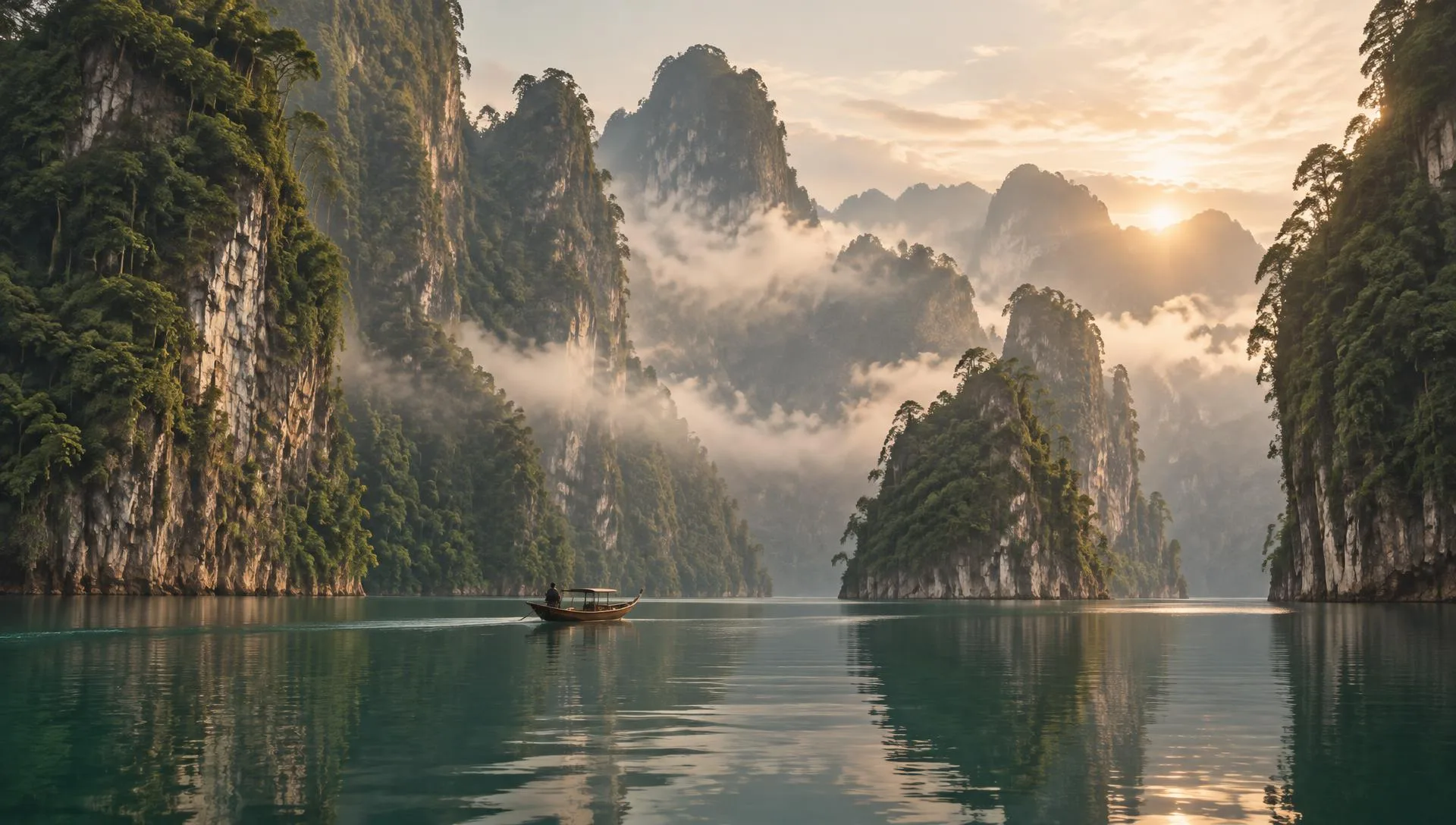
The heart of Khao Sok is Cheow Lan Lake, a 165-square-kilometre emerald reservoir where sheer white-and-grey limestone pillars rise nearly a thousand metres straight out of the water. Spend two nights on a quiet floating raft house moored in a remote arm of the lake with no road access and no mobile signal. At first light, when ribbons of mist hang low over the water, glide silently by wooden paddle canoe into narrow flooded canyons to watch dusky langurs, hornbills, and wild elephants foraging along the shoreline.
“On Cheow Lan Lake at six in the morning, the limestone cliffs rise out of the mist like an ink-wash painting that has not yet dried.”
Regional ledger: Busy resort hubs and their quieter counterparts
Use this geographic ledger to trade Thailand’s busiest commercial strips for serene sanctuaries sharing the same coastline or mountain range:
| Region & Coast | Crowded Mainstream Hub | Quieter Slow-Travel Counterpart | Ideal Stay | Best Seasonal Window |
|---|---|---|---|---|
| Northern Lanna Hills | Central Chiang Mai Night Bazaar & Pai Main Street | Wat Pha Lat Forest Trail, Mae Kampong Village & Nan Valley | 4 – 5 nights | November – February (Crisp 15°C–26°C mountain air & clear skies) |
| Southern Rainforest | Phuket Day-Trip Piers | Khao Sok National Park & Cheow Lan Lake Floating Bungalows | 2 – 3 nights | December – April (Dry trails & calm emerald lake crossings) |
| Eastern Gulf Seaboard | Pattaya & Central Jomtien | Koh Samet National Park (Ao Prao & Ao Karang South Coves) | 3 nights | Year-round (Driest island microclimate in Thailand; peak Nov – May) |
| Lower Gulf Archipelago | Chaweng (Samui) & Haad Rin (South Koh Phangan) | Northern Koh Phangan (Bottle Beach & Thong Nai Pan Noi) | 4 – 5 nights | January – September (Dry summer refuge when the Andaman coast rains) |
| Andaman Sea & Bays | Patong (Phuket) & Ao Nang Main Strip | Koh Yao Noi, Quiet Surin Beach North End, Koh Lanta & Koh Kradan | 4 – 5 nights | December – April (Glass-calm turquoise Andaman seas, 29°C–31°C) |

The Gulf Islands: Koh Samet and the quiet coves of northern Koh Phangan
The islands of the Gulf of Thailand fall into two distinct groups, each solving a different travel puzzle. Three hours southeast of Bangkok off the coast of Rayong lies Koh Samet, a slender, six-kilometre island protected inside Khao Laem Ya–Mu Ko Samet National Park. Because Koh Samet sits in a dry coastal rain shadow, it enjoys more sunny days than almost anywhere else in the country. Skip the lively northeast pier beach and head straight to the western sunset bay of Ao Prao or the tiny southern coral coves of Ao Karang and Ao Wai, where casuarina trees lean over powder-white silica sand.
Further south in the Chumphon Archipelago, Koh Phangan is often misunderstood by those who only know its southern peninsula. Over eighty percent of Koh Phangan remains mountainous granite rainforest. Along its northern and northeastern shores—at Thong Nai Pan Noi and the boat-access cove of Haad Khuat (Bottle Beach)—boutique wooden sanctuaries sit tucked between jungle headlands and deep turquoise bays that remain calm and swimmable right through June, July, and August.
The Andaman Coast: Koh Yao Noi, Surin Beach, and the Trang archipelago
Between December and April, when the northeast monsoon flattens the Andaman Sea into sapphire glass, Thailand’s western coastline comes into its own. Even on Phuket—convenient for its direct international flights—you can find understated elegance by choosing the casuarina-shaded northern headland of Surin Beach (home to historic tropical-modernist pavilions like The Surin) or the quiet pine shore of Nai Yang near Sirinat National Park.
Better still, board a thirty-minute wooden boat east from Phuket into Phang Nga Bay to land on Koh Yao Noi. While looking directly across at the famous limestone pinnacles of Krabi, Koh Yao Noi has no high-rise hotels or noisy beach clubs—only water buffalo grazing in central rice paddies, rubber plantations, and stilt houses along mangrove channels. Further south again, past Koh Lanta in Trang province, tiny islands like Koh Kradan and Koh Muk offer shallow coral gardens right off the sand, bringing a Thailand holiday to a close at the unhurried pace of the tide.
Practical Notes
Questions travellers often ask
What are the best places to visit in Thailand for travellers seeking quiet luxury and culture?
For an unhurried route that avoids mass-market nightlife districts, begin in Bangkok's historic rattlesnake-canal neighbourhoods of Thonburi and Song Wat, take the overnight sleeper train north to the Lanna foothills of Chiang Mai and Nan, fly south to spend two nights on a floating bungalow in Khao Sok National Park (Cheow Lan Lake), and finish on a low-key island such as Koh Yao Noi in Phang Nga Bay, the northern bottle-beach coves of Koh Phangan, or the casuarina bays of Koh Samet.
When is the best time of year for Thailand holidays across the north and the islands?
November through early March is the prime cool and dry season across most of Thailand—including Bangkok, Chiang Mai, Khao Sok National Park, the Andaman coast (Phuket, Krabi, Koh Lanta), and Koh Samet—with daytime temperatures around 28°C to 31°C and cool 16°C northern mornings. If you are travelling between May and September when the southwest monsoon brings rain to the Andaman Sea, head instead to the lower Gulf of Thailand islands (Koh Phangan and Koh Samui), which stay largely dry and sunny throughout summer.
How many days should you spend in Khao Sok National Park?
Plan for three days and two nights in Khao Sok National Park in Surat Thani province. Spend your first night in a treehouse or riverside lodge along the Sok River valley to walk the primary rainforest trails, then transfer to Ratchaprapha Pier for an overnight stay in a boutique floating raft house on Cheow Lan Lake—waking at 6:00 AM to drift by longtail boat beneath towering limestone karsts while gibbons call from the canopy.
Is Koh Phangan suitable for quiet slow travel beyond the Full Moon beach?
Yes. While the southern tip of Haad Rin hosts the monthly party, the northern and eastern shores of Koh Phangan—around Bottle Beach (Haad Khuat), Thong Nai Pan Noi, and Haad Yuan—feel like a completely different island. Framed by granite boulders and steep jungle hills accessible primarily by wooden boat or winding ridge roads, northern Koh Phangan offers peaceful bays, herbal steam sanctuaries, and calm summer swimming.
Why is Koh Samet a favourite island escape from Bangkok?
Located in Rayong province just three hours southeast of Bangkok by car and short boat crossing from Ban Phe pier, Koh Samet sits inside a protected national marine park within the dry microclimate of Thailand's eastern seaboard. It receives significantly less annual rainfall than any other Thai island, making its quiet western and southern coves—such as Ao Prao and Ao Karang—reliable nearly twelve months of the year.
Do UK, US, and European travellers need a visa for Thailand in 2026?
Passport holders from the UK, United States, European Union, Australia, and Canada currently receive a 60-day visa-exempt entry when arriving in Thailand by air or land for tourism, which can be extended once for an additional 30 days at a local Thai immigration office. All foreign arrivals must also complete Thailand's mandatory, free online Digital Arrival Card (TDAC) prior to landing.
Share this story