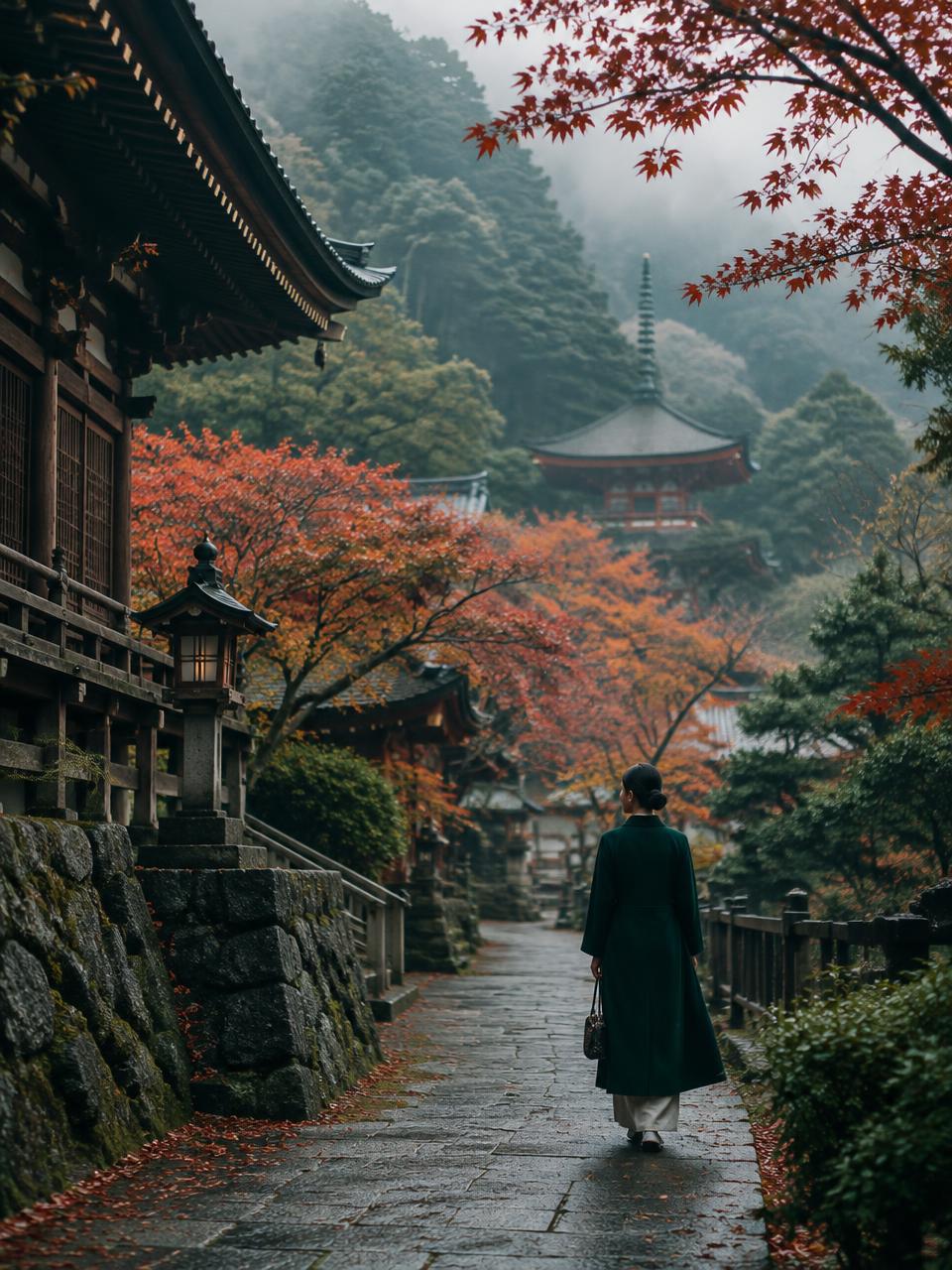
On Mount Koya, welcome is not a transaction but a ritual repeated for twelve centuries.
The cable car lifts you out of the valley and into cedar air. Within an hour, the noise of Osaka feels impossibly distant, replaced by the low resonance of temple bells and the hush of moss underfoot.
Arriving on the mountain
Most travellers arrive by the Nankai line from Namba, changing to the funicular at Gokurakubashi. Arrive by mid-afternoon: dinner is served early, and the bath is warmest before dusk.
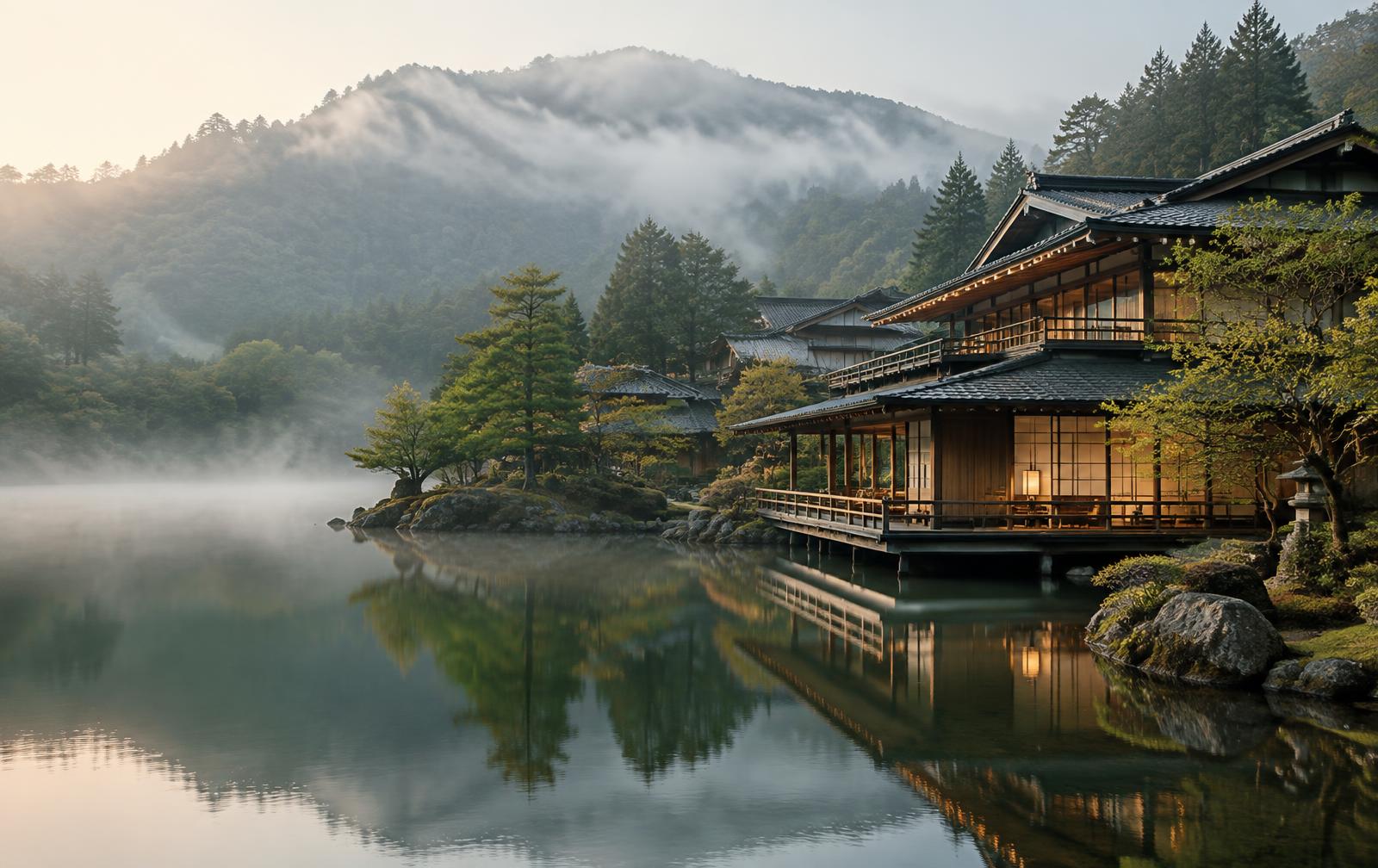
“In the ryokan, every gesture—the folding of a towel, the pouring of tea—is a small act of attention.”
Choosing your lodging
Koyasan offers two very different ways to stay. Both are memorable; they simply ask different things of you.
| Feature | Temple lodging (shukubo) | Mountain ryokan |
|---|---|---|
| Dinner | Shojin ryori, vegetarian | Kaiseki, seasonal |
| Morning | Prayers at 6am | Leisurely breakfast |
| Bathing | Shared bath | Often private onsen |
| Best for | Ritual and stillness | Comfort and privacy |
When to go
Autumn is the mountain at its most beautiful, but winter—quiet, snow-dusted, and candlelit—rewards those who come prepared.
What to pack
- Warm layers, even in summer evenings
- Socks for temple floors
- A small towel for the bath
Frequently asked questions
How many nights should I stay in Koyasan?
One night lets you experience dinner, the morning prayers, and Okunoin cemetery at dusk; two nights allow the mountain to slow you down properly.
Can non-Buddhists stay at a temple lodging?
Yes. Temple lodgings welcome guests of every background; attending morning prayers is invited but never required.
What is the best season to visit Koyasan?
Late October to mid-November brings autumn colour and crisp air, while May offers fresh green forests with fewer visitors.
Share this story