To ask for a single best season in Sri Lanka is to misunderstand the geography of a teardrop island governed by two opposite winds.
For travellers planning around the best time to visit Sri Lanka, the island divides neatly into two distinct seasonal halves. From December through April, dry skies and calm seas settle over the southwest coast (Galle, Ahangama, Mirissa, Tangalle), the central tea highlands (Kandy, Nuwara Eliya, Ella), and the Cultural Triangle (Sigiriya, Polonnaruwa), with coastal temperatures averaging 28°C to 30°C and crisp mountain mornings near 16°C. From May through September, the weather flips: while the southwest receives the Yala rains, the east coast (Trincomalee, Passikudah, Arugam Bay) and northern dry plains enjoy uninterrupted sunshine.
Because the central massif—rising more than two thousand metres above sea level around Adam’s Peak and Horton Plains—acts as a natural weather barrier, rain on one side of the island almost always means clear horizons three hours away on the other. Understanding that rhythm turns monsoon season from an obstacle into a way of having half the country to yourself.
Two monsoons, one year-round island
Unlike mainland Southeast Asia, where a single monsoon blankets entire regions at once, Sri Lanka is shaped by a dual-monsoon cycle. The Yala monsoon arrives from the Indian Ocean in the southwest between May and August, watering the cinnamon gardens of the south and the western slopes of the tea country. Later in the year, the Maha monsoon blows down from the Bay of Bengal between October and January, bringing rain to the east and north while sheltering the southern bays.
In practice, this means the best season to visit Sri Lanka is less a date on the calendar than a choice of compass direction. A winter journey belongs to colonial fort towns, whale-watching off Mirissa, and slow morning trains climbing through cloud forests. A summer journey belongs to empty eastern beaches, ancient monastic ruins shaded by banyan trees, and great herds of elephants gathering beside dry-zone reservoirs.
“In Sri Lanka, the rain does not close the island; it simply asks you to cross the mountains.”
December to April: The classic south coast & hill country window
For first-time visitors following the classic route from Colombo down the southern littoral and up into the tea estates, late December through March is the most reliable window. In Sri Lanka, December weather begins as a lush transition: early December still carries occasional late-afternoon showers that leave the paddies luminous green, before giving way to dry, blue mornings by Christmas.
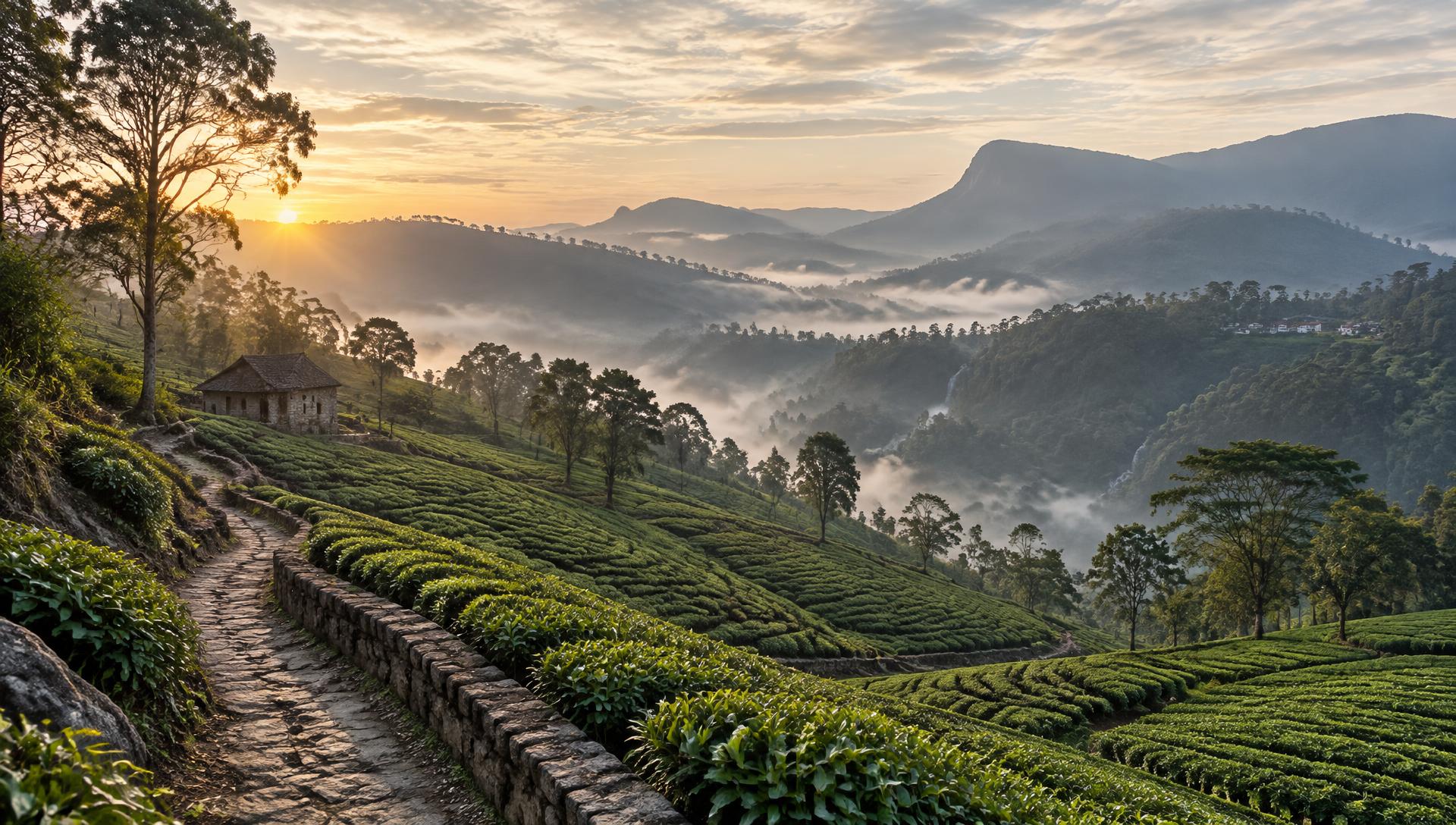
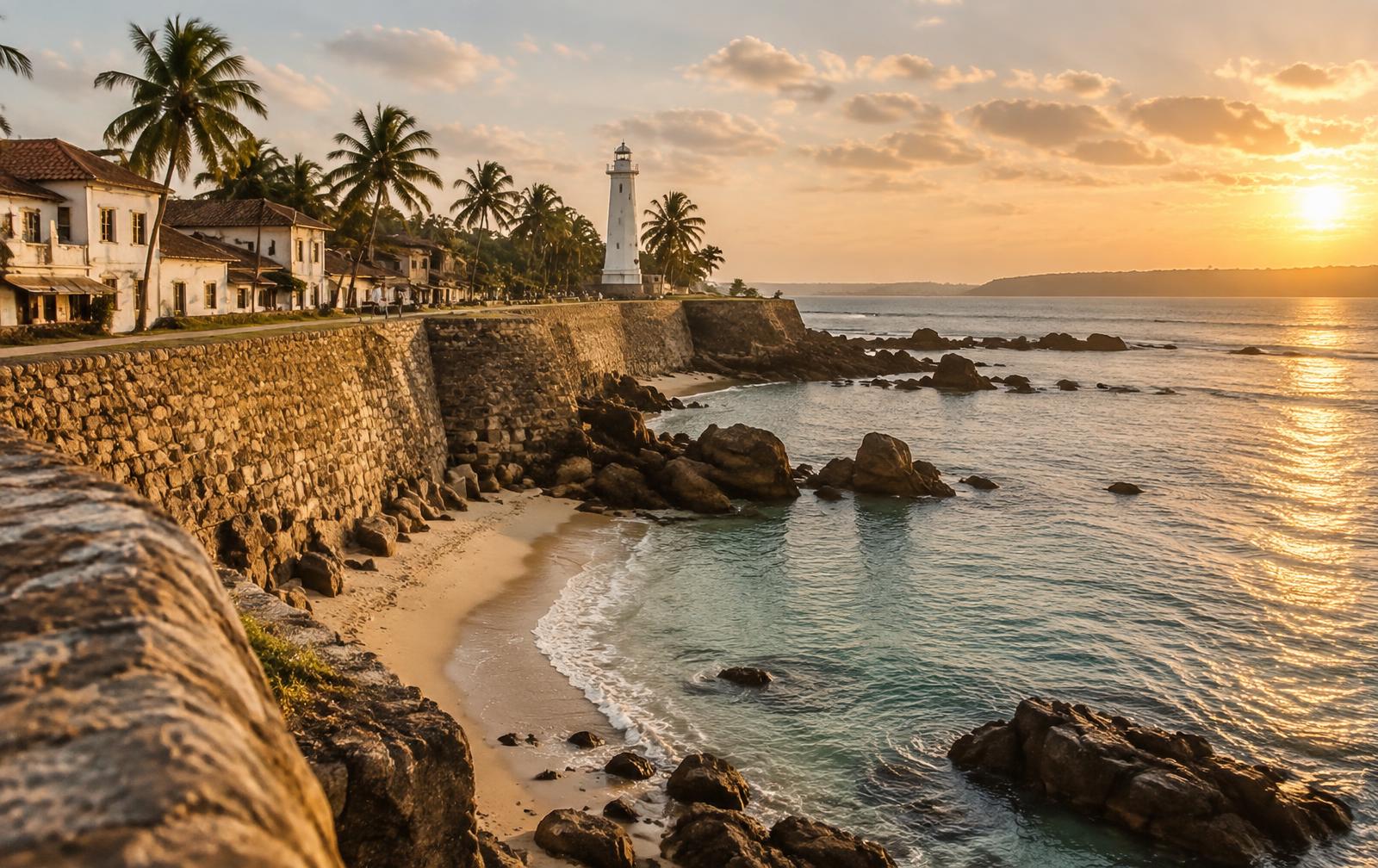
By January, February, and March, the Indian Ocean along the south coast flattens into glass. Morning swims at silent coves near Tangalle and Weligama are effortless, and the ramparts of Galle Fort catch a warm sea breeze at dusk. Upcountry in Hatton, Nuwara Eliya, and Ella, days are dry and bright—ideal for walking the estate trails between tea pluckers’ cottages before woodsmoke and valley mist drift in around four in the afternoon.
A note on April and the Sinhala & Tamil New Year
April marks the warmest month of the year on the coast (often reaching 31°C to 33°C before the rains break) and coincides with Avurudu, the Sinhala and Tamil New Year in mid-April. Many travellers retreat to the cool air of Nuwara Eliya and Ella during this week, where heirloom gardens bloom and temperatures stay ten degrees cooler than the shore.
May to September: The quiet east coast & northern plains
When the southwest monsoon gathers over Galle in May, the eastern shoreline wakes up. Stretching from the natural harbour of Trincomalee and Nilaveli down through Kalkudah, Passikudah, and Arugam Bay, the east coast remains dry, calm, and remarkably unhurried from May until late September.
Because the central mountains block the western clouds, you can spend a July morning climbing the fifth-century rock fortress of Sigiriya at dawn, cycle among the twelfth-century stone stupas of Polonnaruwa, and reach the warm, reef-sheltered bays of Passikudah by afternoon without encountering a drop of monsoon rain.
Month-by-month climate & region almanac
Use this seasonal ledger to match your travel dates with the regions experiencing their finest weather, dry trails, and calmest seas:
| Months | Best Regions to Visit | Avg. Temp (Coast / Hills) | Rainfall & Sea Conditions | Seasonal Highlights |
|---|---|---|---|---|
| December – March | South Coast (Galle, Ahangama, Tangalle), Hill Country (Ella, Nuwara Eliya), Colombo & Cultural Triangle | 29°C / 18°C | Dry, low humidity; calm southwest seas | Peak south-coast swims, blue whales off Mirissa, crisp highland ridge walks |
| April | Hill Country (Ella, Hatton), Cultural Triangle & Southern Bays | 31°C / 20°C | Warm and mostly dry; brief late-month showers | Avurudu New Year rituals, tea harvest in the high valleys, quiet archaeological sites |
| May – August | East Coast (Trincomalee, Passikudah, Arugam Bay), Jaffna & Cultural Triangle | 31°C / 19°C | Dry across east & north; monsoon swells on south/west | Glass-calm east-coast lagoons, surfing in Arugam Bay, Kandy Esala Perahera (July/Aug) |
| September | East Coast, Cultural Triangle (Minneriya) & Northern Province | 30°C / 18°C | Dry in the north-central plains; transitional winds | Peak of the Minneriya & Kaudulla wild elephant gathering; quiet coastal stays |
| October – November | Flexible Island-Wide Slow Travel & Boutique Tea Estates | 28°C / 17°C | Inter-monsoon; sunny mornings with afternoon downpours | Deeply serene heritage ruins, dramatic waterfalls in Ella, lowest boutique hotel rates |
Timing Yala, Udawalawe, and the great elephant gathering
Wildlife movements in Sri Lanka follow water rather than the tourist calendar. In the south, Yala National Park and neighbouring Kumana offer the highest concentration of leopard sightings between February and July, when dry weather shrinks the forest lagoons and brings animals to the water’s edge. Keep in mind that Yala Block 1 typically closes during September and October for annual drought recovery, though quieter adjoining blocks and Wilpattu National Park in the northwest remain open.
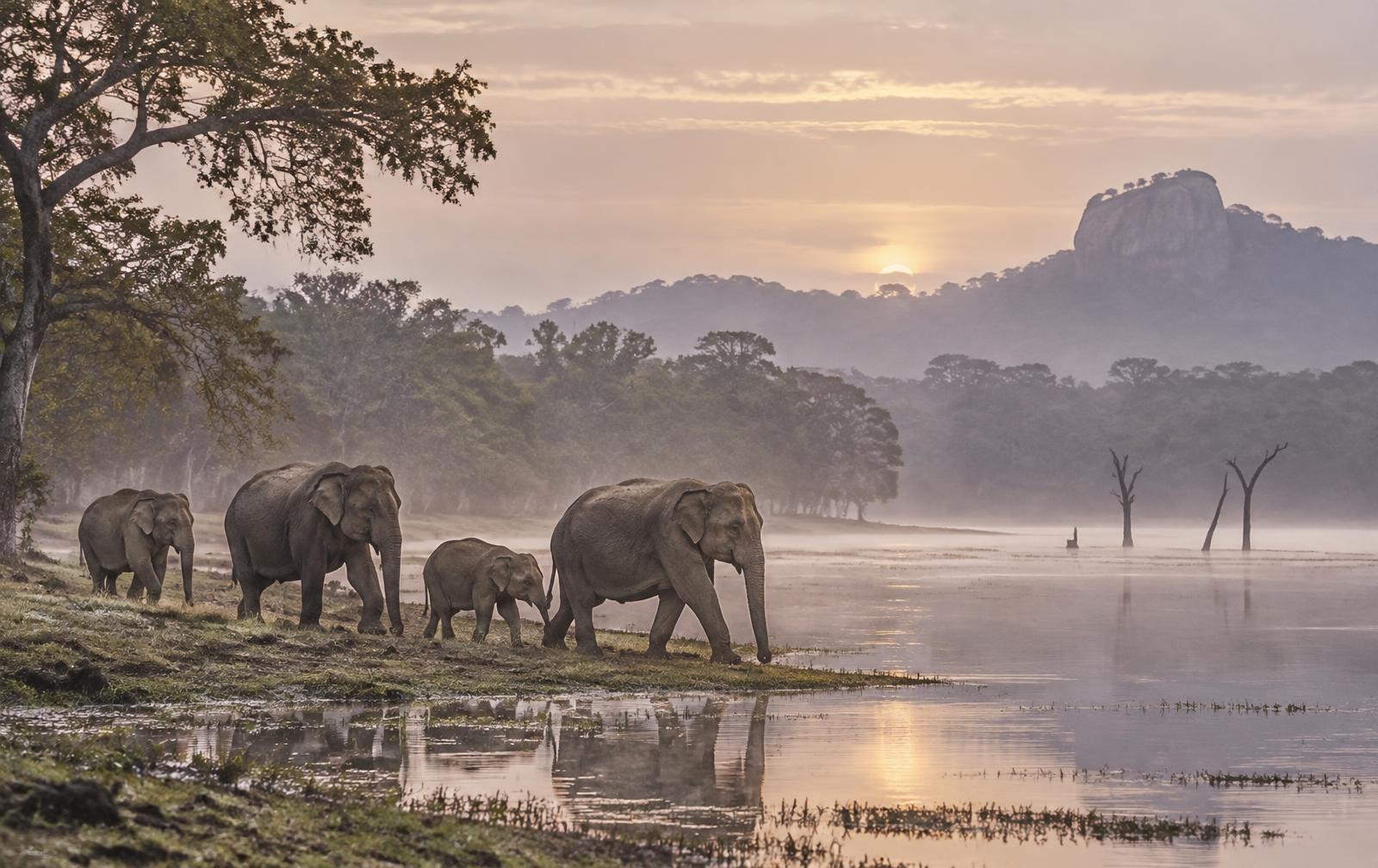
For elephants, two seasons stand out. Udawalawe National Park—tucked below the southern escarpment of the hills—is rewarding twelve months of the year thanks to its permanent reservoir. Between July and September, however, the dry-zone tanks of Minneriya and Kaudulla in the Cultural Triangle stage one of Asia’s greatest natural spectacles, as up to three hundred wild elephants emerge from the forest each afternoon to graze on fresh lakeside grass.
How to pace a route around the rain
Even in the heart of the dry season, Sri Lanka is an equatorial island where brief tropical showers keep the spice gardens alive. The secret to traveling well here is pacing your day like locals do: start at first light—around six in the morning—when temple stones are cool, birdlife is active, and mist still hangs in the valleys. Reserve the midday heat for a long lunch of rice and curry under a ceiling fan or a train ride through the hills, and leave late afternoons open in case a passing cloud rolls off the peaks.
Practical Notes
Questions travellers often ask
What is the best time to visit Sri Lanka for the south coast and hill country?
The best time to visit Sri Lanka's southwest coast (Galle, Ahangama, Tangalle), Colombo, and the central hill country (Ella, Nuwara Eliya, Hatton) is from December through mid-April. During these months, the northeast Maha monsoon leaves the western and southern slopes dry and sunny, with coastal temperatures averaging 28°C to 30°C and highland mornings hovering between 14°C and 22°C.
When is the best season to travel to Sri Lanka's east coast?
From May through September, when the southwest Yala monsoon brings rain to the western coast, the sheltered eastern coastline—including Trincomalee, Passikudah, and Arugam Bay—enjoys dry skies, calm turquoise seas, and daily temperatures around 30°C to 32°C. This makes Sri Lanka a genuine year-round destination depending on which coast you choose.
What is Sri Lanka weather like in December?
December marks the transition into the dry season across the south and west coasts. While brief late-afternoon tropical showers can still pass through during the first ten days of the month, sunshine dominates by mid-December. Daytime temperatures average 29°C in Galle and Colombo and 20°C in Nuwara Eliya, with lush emerald landscapes refreshed by the autumn rains.
When is the best month for a Sri Lanka safari in Yala and Udawalawe?
February through July is the prime window for leopard and sloth bear sightings in Yala National Park, as receding waterholes draw wildlife into the open scrub. Note that Yala Block 1 typically closes for conservation maintenance during September and October. Udawalawe National Park offers reliable elephant sightings year-round, while Minneriya and Kaudulla host the famous dry-season 'Gathering' of wild elephants between July and September.
Are October and November good months to visit Sri Lanka?
October and November represent the inter-monsoon period, when brief, heavy convectional rains can occur across any part of the island, mostly in the late afternoon or evening. For slow travellers who do not mind carrying a linen rain shell, this shoulder window offers the quietest heritage sites at Sigiriya and Polonnaruwa, deeply discounted boutique estate stays, and dramatic cloudscapes.
Can you combine the Cultural Triangle with either coastal season?
Yes. The Cultural Triangle—encompassing Sigiriya, Dambulla, Anuradhapura, and Polonnaruwa—lies in Sri Lanka's northern dry zone and remains accessible from January right through September, making it effortless to pair with Galle and Ella in winter or with Trincomalee and the East Coast in summer.
Share this story