Few islands on earth pack such sudden shifts of altitude and antiquity into so small a compass: within three hours of leaving a coral cove on the Indian Ocean, you can be walking through cloud forest two thousand metres above the sea.
When mapping out the most rewarding things to see in Sri Lanka, the mistake many itineraries make is treating the island’s compact size as an excuse to cover everything at once. Although the country measures barely four hundred kilometres from northern Jaffna to southern Dondra Head, its winding mountain roads and layered history demand a slower tempo. A classic twelve- to sixteen-day arc links four distinct worlds: the ancient hydraulic kingdoms of the Cultural Triangle, the cool tea estates of the central massif, the wildlife sanctuaries of Udawalawe and Yala National Park, and the historic ramparts of southern Galle. Pairing this route with the right coastal window—explored in detail in our month-by-month guide to the best time to visit Sri Lanka—ensures dry trails and calm seas throughout your journey.
Move through those four landscapes with a three-night minimum in each region, and Sri Lanka stops feeling like a checklist of monuments and reveals its deeper character: an island of forest monasteries, spice gardens, railway viaducts, and unhurried coastal evenings.
An island of compact contrasts
Geography explains why Sri Lanka holidays feel so varied. The island is structured like a stepped amphitheatre: a wide ring of coastal lagoons, coconut groves, and dry-zone plains surrounds a dramatic central highland core where peaks rise past 2,400 metres. Every time your road climbs or descends that central escarpment, the temperature shifts by ten degrees, the vegetation changes from palmyra palms to montane rhododendrons, and the architecture transitions from Dutch coral-stone verandas to mist-wrapped planter bungalows.
For travellers asking whether it is safe to travel Sri Lanka independently today, the island remains one of South Asia’s gentlest and most welcoming places to explore. Navigating between regions with a dedicated local driver-guide for the inland leg—before settling independently beside the southern sea—combines complete flexibility with local insight into village kitchens and quiet backroads.
The Cultural Triangle: Sigiriya, Polonnaruwa, and forest monasteries
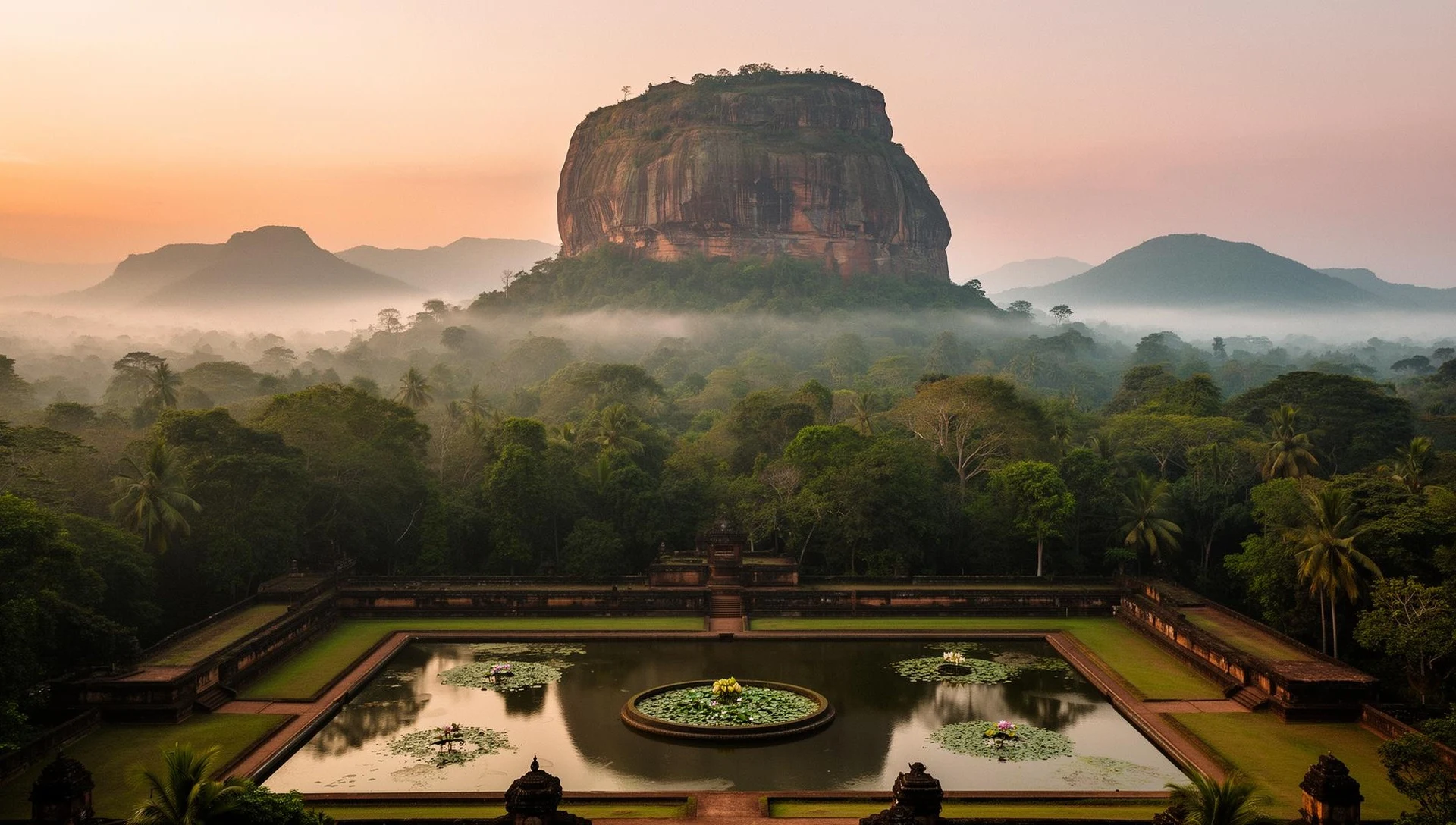
North of the central hills lies the dry-zone plain where Sinhalese civilization flourished for more than fifteen centuries around giant man-made reservoirs known as wewas. At the heart of this Cultural Triangle rises Sigiriya, the fifth-century sky citadel of King Kashyapa. Built atop a sheer two-hundred-metre magma plug above symmetrical water gardens, Sigiriya is best climbed as the gates open at six-thirty in the morning, when mist still hangs in the canopy and the stone steps past the Lion Paws are cool underfoot. On the following dawn, hike the neighbouring forest boulder of Pidurangala Rock to look directly across at Sigiriya’s profile silhouetted against the rising sun.
Rather than rushing between every ruin under the midday sun, choose two ancient capitals and explore them slowly. At Polonnaruwa, rent a bicycle in the late afternoon to ride beneath mara trees beside the vast Parakrama Samudra tank, finishing at the serene twelfth-century granite carvings of the Gal Vihara. Further northwest around Anuradhapura—where a cutting of the sacred Bodhi tree has been tended continuously since 249 BC—detour into the shaded jungle hills of Ritigala, an ascetic eighth-century forest monastery of stone meditation pathways and double-platform pavilions where no stupas or statues were ever built.

The Tea Highlands: Kandy to Ella by rail and the Pekoe Trail
Climbing south from the plains, the road winds through spice valleys of cardamom, clove, and black pepper into Kandy, the last royal capital of the island. Visit the Temple of the Sacred Tooth Relic beside Kandy Lake during the early morning or dusk drum ceremony, and spend an afternoon walking the royal botanical avenues of Peradeniya along the bend of the Mahaweli River.
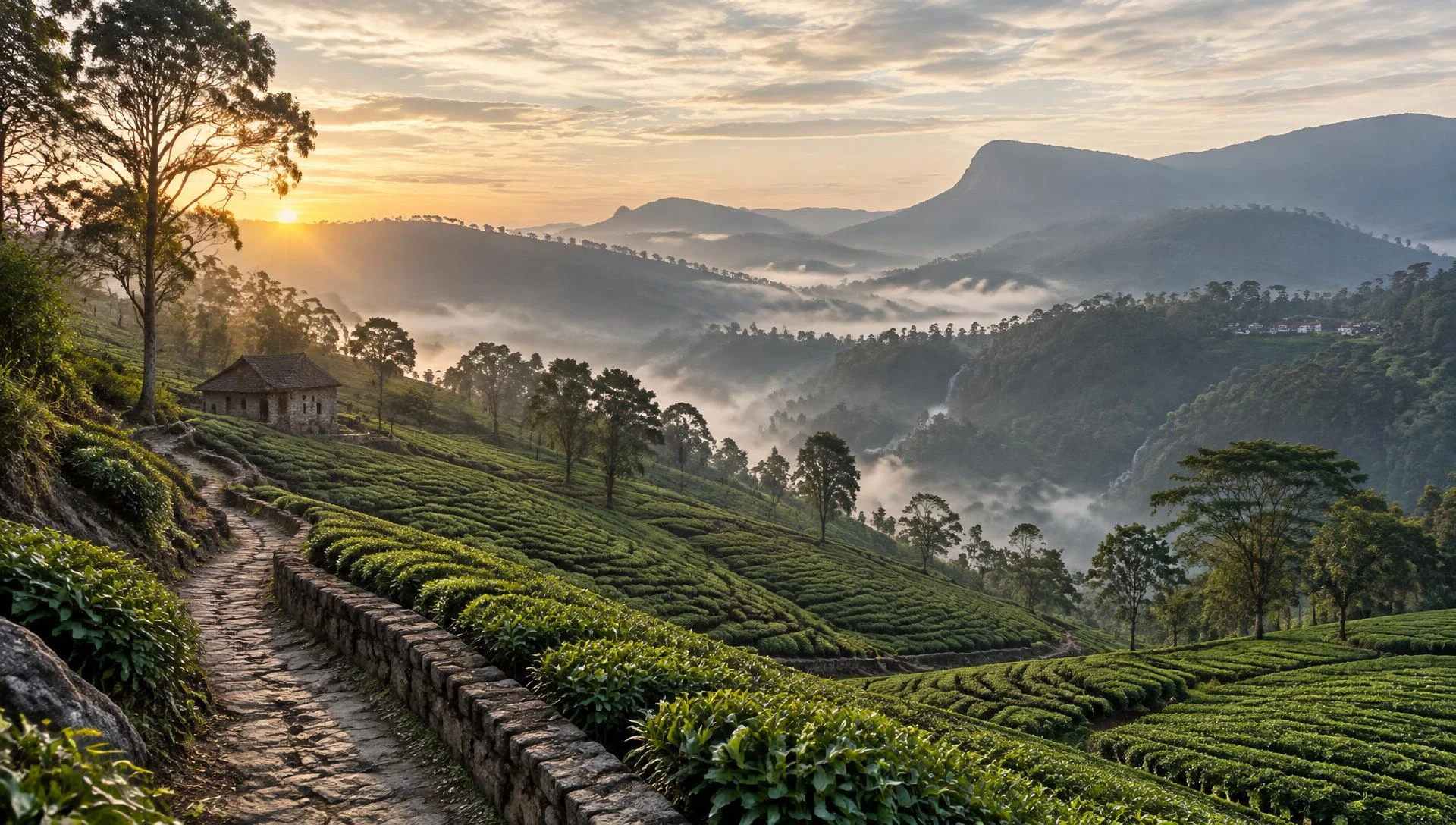
Above Kandy begins one of the great railway journeys of the world. Engineered in the nineteenth century to carry highland tea down to the port of Colombo, the Main Line climbs through cloud forests, waterfalls, and hand-cut granite tunnels past Hatton, Nanu Oya (the station for Nuwara Eliya), and Haputale before rolling across the iconic Nine Arch Bridge near Ella. In recent years, the opening of the 300-kilometre Pekoe Trail—a twenty-two-stage walking route threading along historic estate tracks from Hanthana to Nuwara Eliya and Ella—has given slow travellers an extraordinary way to walk between valleys on foot, passing Tamil tea pluckers, Hindu kovils, and ridge-top viewpoints like Lipton’s Seat at dawn.
“To ride the highland train from Hatton to Ella is to watch the tropics dissolve into cool mountain mist at twenty miles an hour.”
Regional ledger: Essential places to travel in Sri Lanka
Use this geographic ledger to balance ancient heritage, highland walking, wildlife sanctuaries, and coastal rest across your route:
| Region & Hub | Signature Highlights | Quieter Slow-Travel Experience | Recommended Stay | Ideal Timing Window |
|---|---|---|---|---|
| The Cultural Triangle | Sigiriya Rock Fortress, Dambulla Caves & Polonnaruwa | Ritigala Forest Monastery, Pidurangala Dawn & Kaludiya Pokuna | 3 – 4 nights | January – September (Dry mornings across the northern plains) |
| Kandy & Knuckles Foothills | Temple of the Tooth & Peradeniya Botanical Gardens | Pekoe Trail Stage 1 (Hanthana) & Knuckles Cloud Forest Walks | 2 nights | December – April & July – August (Esala Perahera festival season) |
| Highland Tea Country | Kandy to Ella Train, Nine Arch Bridge & Nuwara Eliya | Haputale Ridge, Lipton’s Seat at 6:00 AM & Estate Bungalow Stays | 3 – 4 nights | December – April (Crisp 15°C mornings & clear mountain views) |
| Southern Wildlife Belt | Yala National Park & Udawalawe National Park | Yala Block 5 / Kumana Bird Sanctuary & Gal Oya Boat Safaris | 2 – 3 nights | February – July for Yala leopards; Year-round for Udawalawe elephants |
| Southern Galle & Coast | Galle Fort Ramparts, Unawatuna & Mirissa Bays | Koggala Lake Cinnamon Islands, Ahangama & Silent Tangalle Coves | 4 nights | December – April (Glass-calm southwest seas & golden sunsets) |

Sri Lanka safari sanctuaries: Yala, Udawalawe, and Wilpattu
Dropping down from the southern rim of the mountains around Ella and Wellawaya, the temperature rises and the forest opens into the savanna and scrub lagoons of Sri Lanka’s national parks. Few places of comparable size anywhere in Asia support such a concentration of large wildlife—from apex predators to herds of three hundred elephants.
Choosing the right park shapes your Sri Lanka safari experience. In the southeast corner where dry forest meets the Indian Ocean, Yala National Park is celebrated for the Sri Lankan leopard; without competition from tigers, leopards here have evolved into confident daytime hunters often seen draped across sun-warmed granite kopjes. Because Yala’s famous Block 1 can draw heavy jeep traffic near the main gate, ask your camp naturalist to explore the quieter tracks of Yala Block 5, neighbouring Kumana National Park, or the natural sand-rimmed lakes of Wilpattu National Park in the northwest. If elephants are your priority, national parks in Sri Lanka like Udawalawe—and Minneriya in the north between July and September—offer unhurried hours watching multi-generational herds bathe and feed in open view.
Southern Galle, Ahangama, and the rhythm of the coast
Every classic overland loop finishes where the southern plains meet the sea. Anchoring the coastline is Galle Fort, a living UNESCO World Heritage precinct founded by the Portuguese in the sixteenth century and fortified in coral and granite by the Dutch East India Company in 1663. Inside the car-calm bastions, tropical modernism—pioneered by legendary Sri Lankan architect Geoffrey Bawa—blends with colonnaded merchant houses, spice cafés, and boutique courtyards. Walk the western ramparts from the Utrecht Bastion lighthouse to Flag Rock at five-thirty in the afternoon as sea breezes cool the stone.
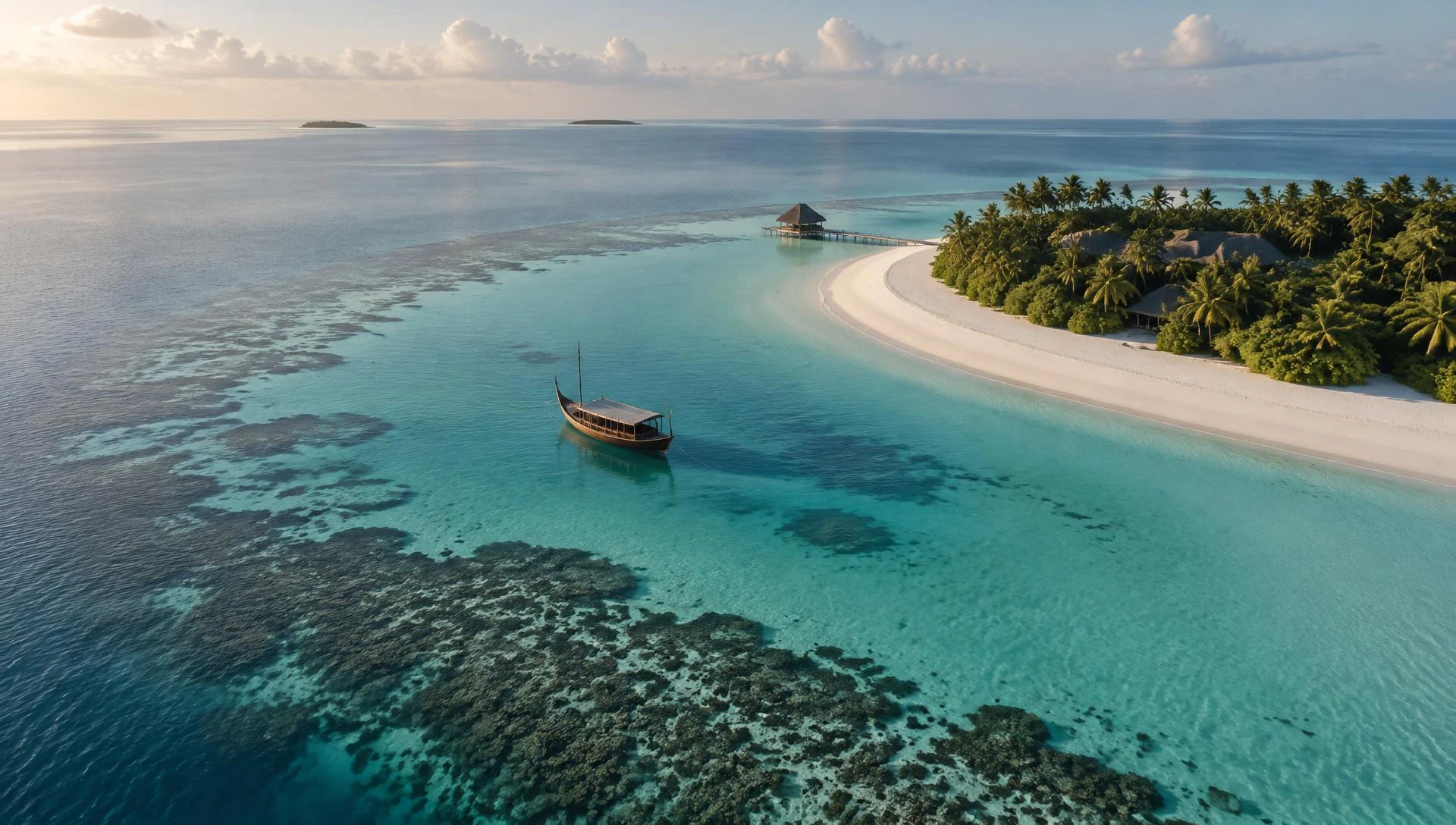
East of southern Galle, the coastline unfolds in a chain of distinct bays. Boat across the mangrove-ringed waters of Koggala Lake to visit quiet cinnamon-peeling islands, watch longboard surfers glide across the reef breaks of Ahangama and Weligama at dawn, or continue further east to Tangalle, where deep crescents of golden sand backed by coconut palms invite you to do nothing at all for three days before the road turns back toward Colombo.
Practical Notes
Questions travellers often ask
What are the most essential things to see in Sri Lanka on a two-week journey?
A well-paced fourteen-day route connects four core regions: the Cultural Triangle in the north-central plains (climbing Sigiriya Rock Fortress at dawn, cycling Polonnaruwa, and visiting the Dambulla cave temples), the central tea highlands (Kandy, the scenic mountain train to Hatton, Nuwara Eliya, and Ella, plus walking a stage of the Pekoe Trail), a southern dry-zone wildlife park (Yala National Park for leopards or Udawalawe for wild elephants), and the southern coast anchored by Galle Fort, Ahangama, and Tangalle.
Is Sri Lanka safe to travel in 2026 for independent and solo travellers?
Yes, Sri Lanka is safe, welcoming, and straightforward to navigate in 2026 for solo travellers, couples, and families alike. Tourism infrastructure across the Cultural Triangle, Hill Country, and coastlines runs smoothly, locals are famously hospitable, and most visitors travel comfortably using a combination of private car with a licensed chauffeur-guide, reserved intercity trains, and domestic highways.
Which national park is better for a Sri Lanka safari: Yala or Udawalawe?
Choose based on the wildlife experience you value most. Yala National Park (along with adjoining Kumana in the southeast) shelters one of the world's highest densities of wild leopards alongside sloth bears and crocodiles across dramatic coastal scrub and granite outcrops. Udawalawe National Park, set below the central hills, offers open grasslands where sighting herds of wild Asian elephants is virtually guaranteed twelve months of the year.
How do you book tickets for the Kandy to Ella highland train?
Reserved seats in First Class Observation, First Class Air-Conditioned, and Second Class Reserved carriages open exactly thirty days before departure through the official Sri Lanka Railways online portal and major stations in Colombo, Kandy, and Ella. For the finest mountain views without spending seven hours on the rails, board at Hatton or Nanu Oya (near Nuwara Eliya) for the final three-hour high-ridge passage through Pattipola and Haputale into Ella.
Where is Galle Fort located and how long should you stay on the south coast?
Galle Fort is located on a rocky peninsula on Sri Lanka's southwestern tip, roughly two hours south of Colombo via the Southern Expressway. Spend at least three to four nights along the southern littoral—basing yourself either inside the seventeenth-century walled streets of Galle Fort for colonial architecture and dining, or fifteen to forty minutes east in the palm-fringed coves of Talpe, Ahangama, Weligama, and Tangalle.
How many days do you need for a classic Sri Lanka holiday?
Ten to fourteen days is the sweet spot for a classic circuit covering the Cultural Triangle, the tea hills, one wildlife safari park, and the south coast without changing hotels every night. If you wish to include the northern peninsula of Jaffna, Wilpattu National Park, or the eastern beaches of Trincomalee and Passikudah, allow seventeen to twenty-one days.
Share this story